Apple Magic Keyboard Review: 8.5/10 - Sleek Wireless Typing
We may earn a commission from links on this page Learn more
At no additional cost to you. As an Amazon Associate we earn from qualifying purchases; we also participate in the eBay Partner Network (EPN). See our full disclosure.
The Apple Magic Keyboard is a well-built, comfortable wireless keyboard that excels within the Apple ecosystem.
typists and gamers looking for a highly satisfying, well-built keyboard like the Apple Magic Keyboard
you are happy with a standard membrane keyboard and don't need the premium features of the Apple Magic Keyboard
Prices last checked October 17, 2026
Overview
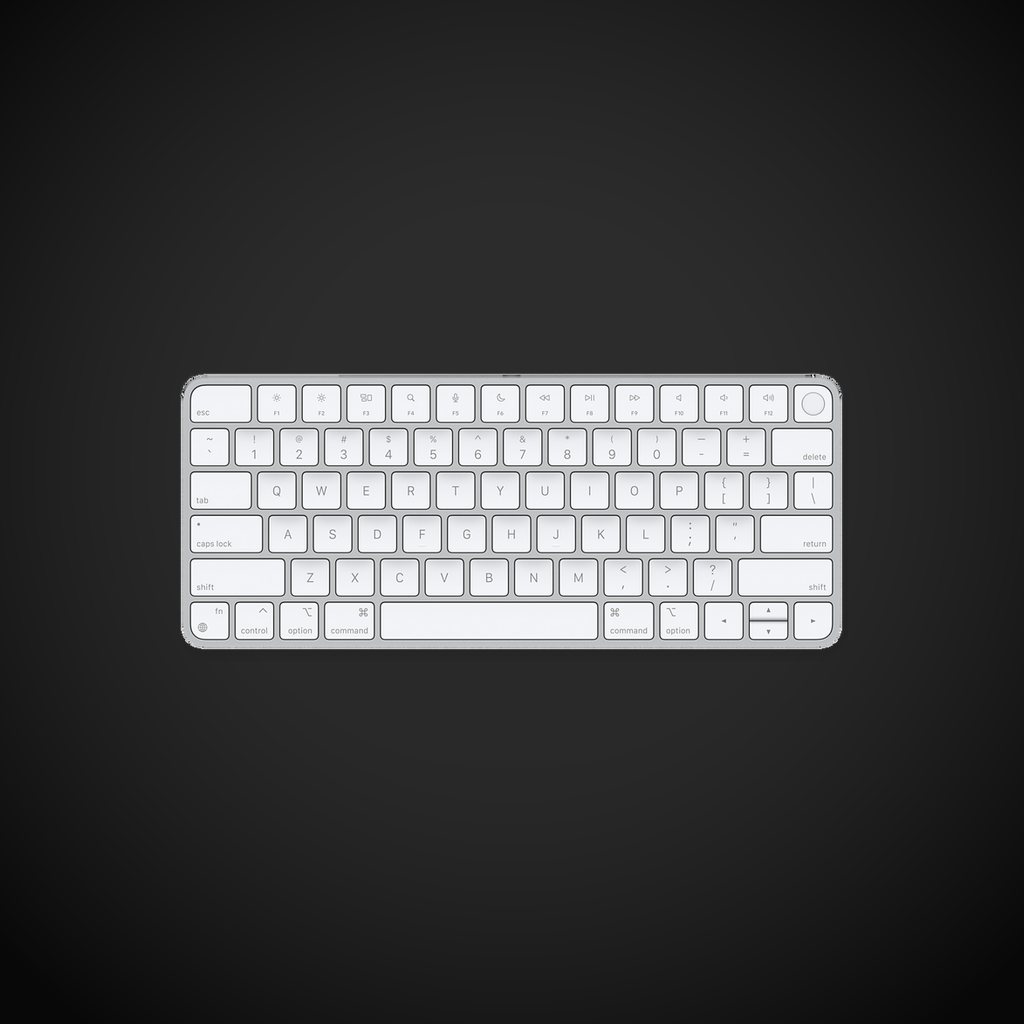
The Apple Magic Keyboard is Apple’s standalone wireless keyboard, sold separately from its Mac lineup. At $99 for the compact version and $129 for the full-size layout with numeric keypad, it offers a premium typing experience built around scissor-switch keys with 1mm of travel, an aluminum frame, and Bluetooth connectivity. Designed primarily for Apple users, it pairs effortlessly with Mac, iPad, and iPhone devices for a seamless typing experience across the ecosystem.
Design & Build
The Magic Keyboard features an anodized aluminum chassis that gives it a solid, premium feel while keeping the profile remarkably slim at just over 4mm at its thinnest point. The low-profile design fits perfectly alongside an iMac or MacBook setup, and the fingerprint-resistant coating helps keep the keys looking clean between uses. A built-in rechargeable battery is tucked inside, providing roughly a month of use on a single charge via the included Lightning to USB-C cable.
Performance
Typing on the Magic Keyboard is quiet and comfortable thanks to the scissor-switch mechanism, which provides stable key movement and a satisfying amount of tactile feedback without the noise of a mechanical board. The 1mm key travel strikes a middle ground between the shallow butterfly keyboards and deeper mechanical switches, making it suitable for long writing sessions without finger fatigue. Bluetooth pairing is fast and reliable, and the keyboard can seamlessly switch between a Mac, an iPad, and an iPhone with just a tap in the Bluetooth settings.
Features
The Magic Keyboard connects wirelessly via Bluetooth and lacks any USB pass-through ports, so the Lightning port on the bottom edge is used exclusively for charging the internal battery. The function row doubles as shortcut keys for brightness, volume, media playback, and Mission Control, though there are no dedicated media keys labeled separately. Notably absent are backlit keys, which is a surprising omission at this price point, and there is no tilt adjustment mechanism for improving wrist ergonomics during extended typing sessions.
Pros
- Premium aluminum build quality feels sturdy and looks elegant on any desk
- Comfortable scissor-switch typing with quiet keys and responsive tactile feedback
- Exceptional battery life lasting approximately one month per charge
- Seamless integration across Apple devices, switching between Mac, iPad, and iPhone
Cons
- No backlit keys, making it difficult to type accurately in dimly lit rooms
- Lightning charging port instead of USB-C, requiring a separate cable for charging
- Expensive for a membrane-based keyboard at $99 for the compact layout
- Function row doubles as shortcut keys, which can be confusing without dedicated labels
- No tilt adjustment for improved wrist ergonomics during long sessions
- Only works well within the Apple ecosystem with limited Windows compatibility
Verdict
The Apple Magic Keyboard is a well-built, comfortable wireless keyboard that excels within the Apple ecosystem. Its long battery life, premium aluminum materials, and quiet scissor switches make it a solid daily driver for Mac users who value aesthetics and device integration. However, the lack of backlighting, reliance on Lightning charging, and high price relative to feature-rich competitors keep it from being a universal recommendation. At $99 for the compact version, it is a good choice for dedicated Apple users but a harder sell for anyone who wants backlit keys, USB-C charging, or mechanical switches.
Sources
Technical Specifications
How We Scored This Product
Every product on ComfyTechCheck is scored on a 1 to 10 scale across four criteria. Each criterion is weighted differently depending on the product category to reflect what matters most to real buyers.
- Performance & Capabilities 40% Speed, accuracy, quality of output in its category.
- Build & Design Quality 30% Materials, construction quality, durability, form factor.
- Consumer Value 20% Price-to-performance ratio relative to direct competitors.
- User Experience 10% Ease of setup, daily usability, comfort, ergonomics.
Scores are assigned by our editorial team after hands-on testing or extensive research using verified user reports, expert analysis, and technical specifications. For the full weight breakdown by category, visit our How We Rate page.