Govee Immersion TV Backlight Review: 8.6/10 - Affordable Ambilight for Any TV
We may earn a commission from links on this page Learn more
At no additional cost to you. As an Amazon Associate we earn from qualifying purchases; we also participate in the eBay Partner Network (EPN). See our full disclosure.
The Govee Immersion TV Backlight is the best budget-friendly way to add content-reactive backlighting to any TV.
smart home users looking for vibrant, easily automated, and customizable smart lighting from the Govee Immersion TV Backlight
you prefer standard wall switches and have no interest in managing lighting apps or smart features of the Govee Immersion TV Backlight
Prices last checked July 22, 2026
Overview
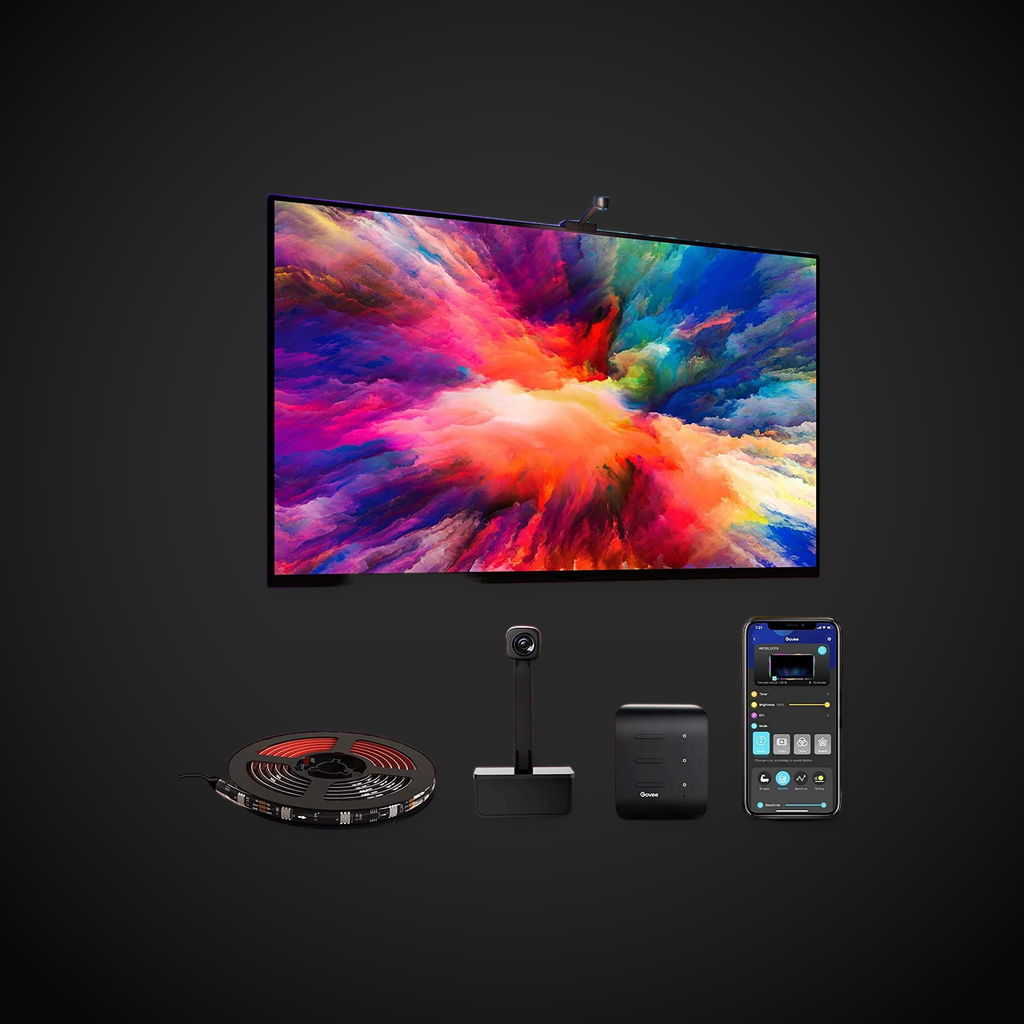
The Govee Immersion TV Backlight is a camera-based smart lighting system that brings Ambilight-style content-reactive lighting to any TV regardless of brand or model. At $79 for the standard kit, it is significantly more affordable than Philips Hue’s gradient strip plus HDMI Sync Box combination, which costs over $450. The system uses a small camera that clips to the top of your TV to capture on-screen colors and replicate them with the attached LED strip.
Design & Build
The kit includes a 2-meter RGBIC LED strip with white LEDs for improved accuracy, a gravity-suspended camera module, and the necessary power adapters. The camera’s gravity suspension design lets it sit naturally on the top bezel of your TV without brackets, and at just 0.5 inches thick, it is unobtrusive against slim modern displays. The LED strip adheres to the back of the TV with 3M tape and wraps around all four edges. Setup involves calibrating the camera by placing colored cards on the screen, a process that takes about 10 minutes and yields good results on the first attempt.
Performance
Color accuracy is impressive for a camera-based system, with the RGBIC LEDs capable of displaying multiple colors on different segments of the strip simultaneously. The added white LEDs in the latest generation improve pastel and white content accuracy, which was a weakness of earlier all-RGB strips. Fisheye correction and black bar detection prevent the camera from picking up letterbox bars or distorting colors at the edges. Response latency is around 100-150 milliseconds, which is noticeable during fast scene cuts but generally acceptable for ambient effects. The system works best in dim to moderately lit rooms where the camera has a clear view of the screen.
Features
The Govee Home app provides full control over effects, brightness, and color modes, including static scenes and music-reactive modes. DreamView mode allows the Immersion kit to sync with other Govee lights around the room for whole-room immersion. Voice control via Alexa and Google Assistant works reliably for power and mode switching. The camera-based approach means no HDMI passthrough is required, preserving full 4K HDR and Dolby Vision signal integrity with zero latency impact on your video source.
Pros
- Costs $79 vs $450+ for Philips Hue gradient strip + HDMI Sync Box
- Works with any TV brand, size, or HDMI configuration (no HDMI passthrough)
- No video signal passthrough, maintaining full 4K HDR and Dolby Vision integrity with zero HDMI latency
- DreamView mode syncs with other Govee lights for whole-room immersion
Cons
- Camera-based system requires unobstructed line-of-sight to the TV screen
- Bright ambient light during daytime can wash out color accuracy
- Response latency of 100-150ms is noticeable during fast scene cuts and action movies
- Calibration setup needed each time the TV is moved or bumped
Verdict
The Govee Immersion TV Backlight is the best budget-friendly way to add content-reactive backlighting to any TV. It sacrifices some precision compared to Philips Hue’s HDMI-based system but delivers impressive results at a fraction of the price, making it an easy recommendation for movie and gaming enthusiasts.
Sources
Technical Specifications
How We Scored This Product
Every product on ComfyTechCheck is scored on a 1 to 10 scale across four criteria. Each criterion is weighted differently depending on the product category to reflect what matters most to real buyers.
- Performance & Capabilities 40% Speed, accuracy, quality of output in its category.
- Build & Design Quality 30% Materials, construction quality, durability, form factor.
- Consumer Value 20% Price-to-performance ratio relative to direct competitors.
- User Experience 10% Ease of setup, daily usability, comfort, ergonomics.
Scores are assigned by our editorial team after hands-on testing or extensive research using verified user reports, expert analysis, and technical specifications. For the full weight breakdown by category, visit our How We Rate page.