iPhone 15 Pro Max Review: 8.8/10 - Powerful Flagship
We may earn a commission from links on this page Learn more
At no additional cost to you. As an Amazon Associate we earn from qualifying purchases; we also participate in the eBay Partner Network (EPN). See our full disclosure.
The iPhone 15 Pro Max earns an 8.8 out of 10, losing points for 27W charging that still lags far behind Android rivals charging at 45W or higher.
users wanting a premium, feature-rich Apple smartphone like the iPhone 15 Pro Max with powerful Flagship
you are content with your current phone or want a much cheaper alternative than the iPhone 15 Pro Max
Prices last checked July 22, 2026
Overview
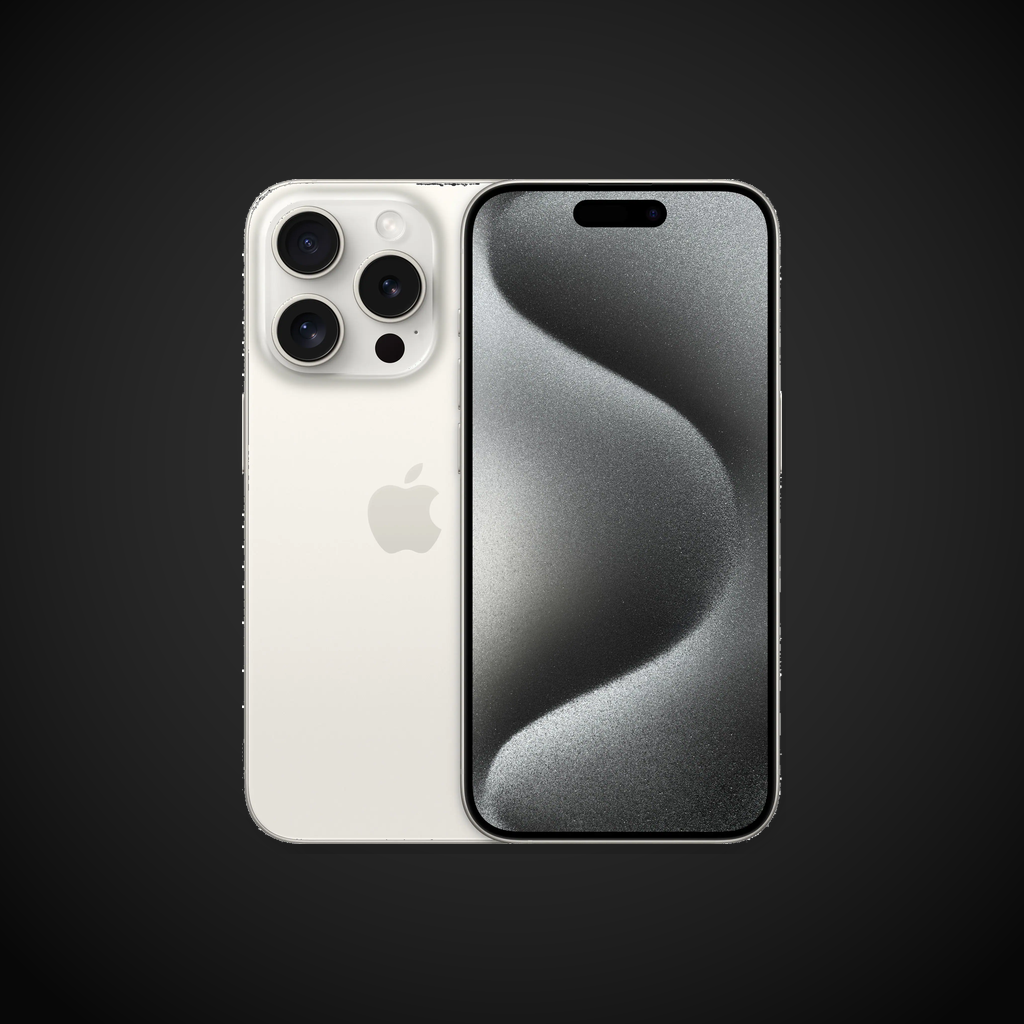
The iPhone 15 Pro Max is Apple’s most ambitious flagship to date, introducing a titanium chassis, the industry-first 3nm A17 Pro chip, and an exclusive 5x tetraprism telephoto camera. Priced at $1,199, it competes directly with the Samsung Galaxy S24 Ultra and Google Pixel 8 Pro, carving out a distinct identity through premium materials, pro-grade video workflows, and Apple’s expanding satellite safety features. After extensive testing, this is the most powerful and feature-rich iPhone Apple has ever built.
Design and Display
Apple swapped stainless steel for aerospace-grade Grade 5 titanium, shaving weight to 221 grams while dramatically improving durability and giving the phone a refined brushed-metal finish. The 6.7-inch LTPO Super Retina XDR OLED display runs at a silky 120Hz ProMotion refresh rate, supports HDR10 and Dolby Vision, and peaks at a blinding 2000 nits for exceptional outdoor visibility. A new customizable Action Button replaces the long-running mute switch, letting you trigger the camera, flashlight, voice memo, or any shortcut with a single press. Ceramic Shield glass on the front and an IP68 rating for submersion up to 6 meters complete a build that feels both luxurious and rugged.
Performance
The A17 Pro chip, fabricated on TSMC’s 3nm N3B process, packs 19 billion transistors driving a hexa-core CPU with two 3.78GHz performance cores and four 2.11GHz efficiency cores. The 6-core GPU introduces hardware-accelerated ray tracing and mesh shading, enabling console-grade titles like Resident Evil Village and Death Stranding to run natively on the phone. Paired with 8GB of RAM and NVMe storage across 256GB, 512GB, and 1TB configurations, the iPhone 15 Pro Max delivers Geekbench 6 scores exceeding 2900 single-core and 7200 multi-core, comfortably outpacing every Android rival in raw CPU throughput.
Camera System
The triple rear camera centers on a 48MP f/1.8 main sensor with sensor-shift optical stabilization that defaults to a stunning 24MP super-high-resolution capture for exceptional detail in every shot. A 12MP f/2.2 ultrawide with a 120-degree field of view handles expansive landscapes, while the exclusive 12MP tetraprism telephoto delivers genuine 5x optical zoom at 120mm equivalent through a folded-lens design with 3D sensor-shift OIS. The LiDAR scanner enables instant autofocus in low light, and the camera system captures 4K Dolby Vision HDR video at up to 60fps as well as ProRes Log for professional color grading workflows.
Battery and Charging
A 4441mAh lithium-ion battery delivers reliable all-day endurance, achieving up to 29 hours of video playback and a GSMArena active use rating of 16 hours on a single charge. Wired charging via the USB-C port supports up to 27W with USB Power Delivery, reaching 50 percent in roughly 30 minutes with a 20W adapter. MagSafe wireless charging tops out at 15W, Qi2 wireless charging also reaches 15W with iOS 17.2 or later, and the phone supports 4.5W reverse wired charging for small accessories like AirPods.
Software and Connectivity
The switch to USB-C with USB 3.2 Gen 2 speeds at up to 10Gbps transforms the iPhone into a serious content creation tool, enabling direct ProRes recording to external SSDs and fast 4K HDR display output over DisplayPort. Wi-Fi 6E brings faster throughput and lower latency on compatible networks, Bluetooth 5.3 improves audio streaming efficiency, and the second-generation Ultra Wideband chip enables precise Find My location tracking. Emergency SOS via satellite lets you text emergency services when cellular coverage is unavailable, and Roadside Assistance via satellite connects you to AAA for help with a flat tire or dead battery, all free for two years.
Pros
- Aerospace-grade titanium chassis saves 19g while improving durability
- A17 Pro 3nm chip delivers class-leading CPU and GPU performance with hardware ray tracing
- 48MP main camera with 24MP super-high-resolution default capture
- Exclusive 5x tetraprism telephoto at 120mm equivalent with 3D sensor-shift OIS
- 6.7-inch LTPO ProMotion OLED display peaks at 2000 nits
- USB-C with USB 3.2 Gen 2 (10Gbps) for direct ProRes recording to external SSDs
- Emergency SOS and Roadside Assistance via satellite free for two years
Cons
- 27W wired charging lags far behind Android rivals at 45W or higher
- No bundled charger in the box
- Starting price of $1,199 is higher than many competitors
- 60 Hz base refresh rate on non-Pro models highlights the gap
Verdict
The iPhone 15 Pro Max earns an 8.8 out of 10, losing points for 27W charging that still lags far behind Android rivals charging at 45W or higher, and for the absence of a bundled charger in the box. Everything else - the titanium build, the blazing A17 Pro chip, the versatile 48MP camera system with genuine 5x optical zoom, the brilliant ProMotion display, and the thoughtful satellite safety features - makes this the most powerful and well-rounded iPhone Apple has ever shipped. If you want the ultimate iOS experience with pro-grade camera and video capabilities, this is the phone to buy.
Category Context
The iPhone 15 Pro Max ($1,199) competes in the premium flagship segment against the Samsung Galaxy S24 Ultra ($1,299, S Pen, 10x optical zoom, 45W charging) and the Google Pixel 8 Pro ($999, Tensor G3, Magic Editor, 7 years OS updates). Apple’s advantages are the aerospace-grade titanium build that saves 19 grams over the stainless steel predecessor, the A17 Pro chip that is the first 3nm smartphone processor with hardware ray tracing, the exclusive 5x tetraprism telephoto lens delivering optical-quality zoom at 120mm equivalent, and the ProMotion 120Hz display peaking at 2000 nits. The tradeoffs are the 27W wired charging that lags significantly behind Android rivals at 45W or higher, the absence of a bundled charger, and the higher starting price. For iPhone users who want the most powerful and feature-rich iOS device with the best camera system Apple offers, the 15 Pro Max is the definitive choice. The iPhone 16 Pro Max (expected fall 2026) will likely add a larger display and Capture Button.
Sources
Technical Specifications
How We Scored This Product
Every product on ComfyTechCheck is scored on a 1 to 10 scale across four criteria. Each criterion is weighted differently depending on the product category to reflect what matters most to real buyers.
- Performance & Capabilities 40% Speed, accuracy, quality of output in its category.
- Build & Design Quality 30% Materials, construction quality, durability, form factor.
- Consumer Value 20% Price-to-performance ratio relative to direct competitors.
- User Experience 10% Ease of setup, daily usability, comfort, ergonomics.
Scores are assigned by our editorial team after hands-on testing or extensive research using verified user reports, expert analysis, and technical specifications. For the full weight breakdown by category, visit our How We Rate page.