Razer DeathAdder V4 Pro Review: 8.6/10 - Refined Icon, Still the Ergonomic King
We may earn a commission from links on this page Learn more
At no additional cost to you. As an Amazon Associate we earn from qualifying purchases; we also participate in the eBay Partner Network (EPN). See our full disclosure.
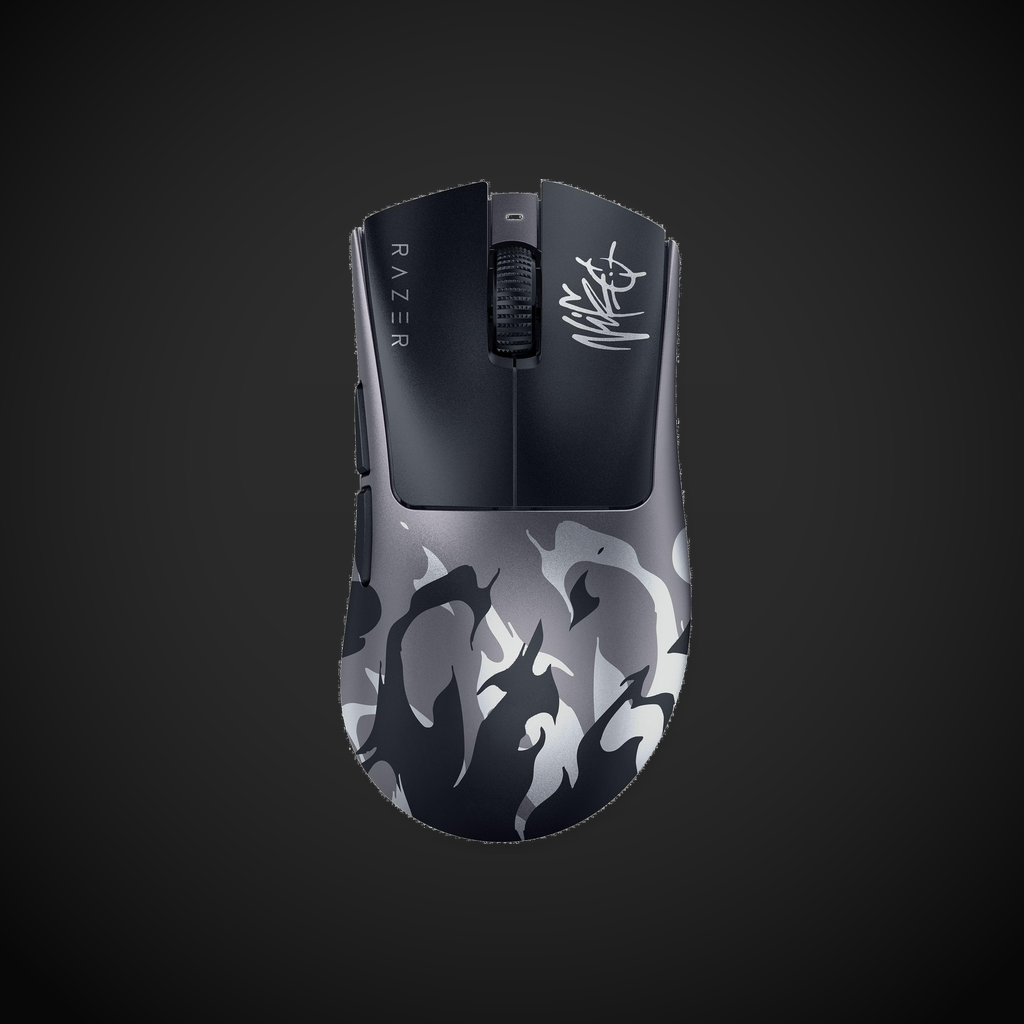
The Razer DeathAdder V4 Pro is the best ergonomic gaming mouse on the market for right-handed users.
users who need precise tracking, comfort, and extra buttons from the Razer DeathAdder V4 Pro
your current mouse already feels comfortable and you don't need the extra features of the Razer DeathAdder V4 Pro
Prices last checked October 15, 2026
Overview
The Razer DeathAdder V4 Pro is the latest iteration of the most iconic ergonomic gaming mouse in history. It sheds weight, upgrades the sensor to Razer’s Focus Pro 35K, and adds wireless charging via Razer’s new Mouse Dock Pro. At $149, it’s competitive with the Logitech G903 and Asus ROG Harpe Ace, but the right-handed ergonomic shape that defined a generation of gaming mice remains unchanged - and that’s both its greatest strength and its most limiting factor.
Design & Build
The DeathAdder shape is essentially unchanged from the V3 - a pronounced right-hand hump that fills your palm with zero forced contact points. Razer has reduced the weight from 88g to 74g by switching to a thinner shell material, but it still feels solid with no creaking or flex. The matte black coating is grippy dry but turns slippery with sweaty hands - the included grip tape in the box is essential if you play in a warm room. The new RGB lighting strip along the palm-rest is subtle and can be disabled entirely in Synapse. The scroll wheel is Razer’s new Tactile Gen-2 with notched, precise steps that feel excellent for weapon switching in FPS games, though the rubberized coating collects dust noticeably.
Performance
The Focus Pro 35K sensor is overkill for 99% of users - it tracks accurately up to 30,000 DPI with 99.8% resolution accuracy, and motion sync ensures pixel-perfect tracking at any speed. In practice, the 1,000Hz polling rate out of the box is smooth and responsive in competitive shooters like Valorant and CS2. The HyperPolling Wireless dongle (sold separately for $29) enables 4,000Hz polling, which reduces click latency to sub-0.5ms - the difference is perceptible on a 360Hz monitor but wasted at 144Hz. The optical switches under the main buttons are rated for 100 million clicks and feel snappy with zero debounce delay, though the actuation is slightly stiffer than mechanical switches for rapid tapping.
Features
The battery life is a mixed bag. At 1,000Hz polling, you get a solid 90 hours - a full week of heavy gaming sessions. At 4,000Hz, that drops to 30 hours, requiring a weekly charge if you’re demanding the lowest latency. USB-C charging is fast (full charge in under 90 minutes), and Razer’s Mouse Dock Pro (also sold separately at $69) adds Qi wireless charging. The eight programmable buttons are more than enough for most games, though the two side buttons on the left edge are positioned slightly too far forward for small hands. Synapse 4 remains the necessary evil of Razer peripherals - it’s feature-rich but bloated, and I still don’t appreciate being asked to create an account just to save my DPI settings onboard.
Pros
- Iconic ergonomic shape, refined to perfection
- Excellent sensor performance
- Lightweight at 74g without compromising build
- Optical switches eliminate double-click issues
Cons
- HyperPolling dongle and charging dock sold separately
- Synapse software remains bloated
- Right-handed only - lefties need not apply
- Sweaty hands need the included grip tape
Verdict
The Razer DeathAdder V4 Pro is the best ergonomic gaming mouse on the market for right-handed users. The weight reduction, premium sensor, and optical switches make it a worthy upgrade over the V3, and the shape remains as comfortable as ever for palm and claw grippers. Just budget for the HyperPolling dongle if you want the full experience, and accept that Razer’s software ecosystem is a tax you have to pay.
Sources
Technical Specifications
How We Scored This Product
Every product on ComfyTechCheck is scored on a 1 to 10 scale across four criteria. Each criterion is weighted differently depending on the product category to reflect what matters most to real buyers.
- Performance & Capabilities 40% Speed, accuracy, quality of output in its category.
- Build & Design Quality 30% Materials, construction quality, durability, form factor.
- Consumer Value 20% Price-to-performance ratio relative to direct competitors.
- User Experience 10% Ease of setup, daily usability, comfort, ergonomics.
Scores are assigned by our editorial team after hands-on testing or extensive research using verified user reports, expert analysis, and technical specifications. For the full weight breakdown by category, visit our How We Rate page.