Samsung Odyssey OLED G8 Review: 8.8/10 - OLED Gaming Done Right
We may earn a commission from links on this page Learn more
At no additional cost to you. As an Amazon Associate we earn from qualifying purchases; we also participate in the eBay Partner Network (EPN). See our full disclosure.
The Samsung Odyssey OLED G8 is the ultrawide monitor to buy if you prioritize image quality above all else.
users seeking the vibrant color accuracy and smooth refresh rates of the Samsung Odyssey OLED G8
your current display meets your resolution and refresh needs, making the Samsung Odyssey OLED G8 redundant
Prices last checked October 19, 2026
Overview
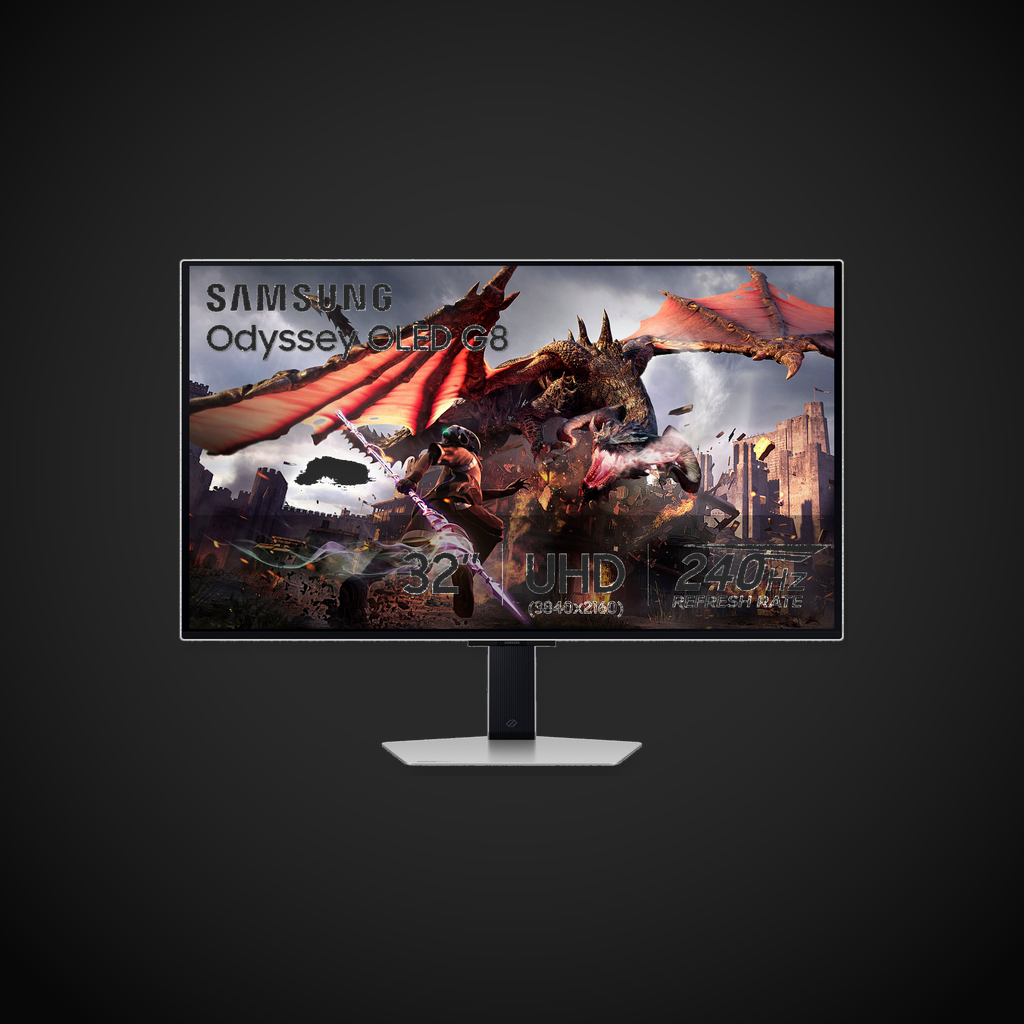
The Samsung Odyssey OLED G8 is the ultrawide gaming monitor OLED enthusiasts have been waiting for. Combining Samsung’s third-gen QD-OLED panel technology with a 175Hz refresh rate and true 0.03ms response time, it delivers an image quality that makes even high-end IPS panels look dated. At $999, it’s priced competitively against LG’s WOLED offerings and pulls ahead in color volume and HDR performance.
Design & Build
Samsung has toned down the gamer aesthetic compared to the previous Odyssey generation. The metal stand is hefty and adjustable for height, tilt, and swivel, though the 34-inch footprint still demands a deep desk. The rear panel has a subtle ring of CoreSync RGB lighting that’s tasteful rather than garish - you can set it to ambient-match or disable it entirely for a clean look. The bezels are thin on three sides, and the 1800R curvature is aggressive enough to wrap around your peripheral vision without distorting productivity work. Cable management routes through the stand neck, keeping the desk clean.
Performance
This is where the Odyssey OLED G8 earns its price tag. The QD-OLED panel delivers 99.3% DCI-P3 coverage and a 1,000,000:1 contrast ratio - blacks are truly black, with zero blooming or halo effects. In HDR titles like Cyberpunk 2077 and Alan Wake 2, neon signs and muzzle flashes punch with an intensity that no IPS or VA panel can match. The 175Hz refresh rate at 3440x1440 is buttery smooth with both AMD FreeSync Premium Pro and NVIDIA G-Sync Compatible running without issue. Response time at 0.03ms GtG means motion clarity is flawless - no ghosting, no inverse ghosting artifacts. The anti-glare coating is Samsung’s new semi-gloss treatment that preserves contrast far better than the matte coatings on LG’s OLED monitors.
Features
| |The connectivity suite is solid: one HDMI 2.1 port (supports 3440x1440 at 175Hz), one DisplayPort 1.4, and a USB-C port with 90W Power Delivery that can charge a laptop while driving the display - genuinely useful for MacBook users. The built-in Samsung Gaming Hub is a nice bonus for Xbox Cloud Gaming subscribers, though the Tizen smart TV interface feels sluggish compared to a dedicated streaming box. The pixel cleaning cycle runs automatically when the monitor enters standby, mitigating burn-in risk, and Samsung’s three-year burn-in warranty provides peace of mind. SDR brightness maxes out at 250 nits, which is fine for a dim room but struggles in bright, sunlit spaces.
| The connectivity suite is solid: one HDMI 2.1 port (supports 3440x1440 at 175Hz), one DisplayPort 1.4, and a USB-C port with 90W Power Delivery that can charge a laptop while driving the display - genuinely useful for MacBook users. The built-in Samsung Gaming Hub is a nice bonus for Xbox Cloud Gaming subscribers, though the Tizen smart TV interface feels sluggish compared to a dedicated streaming box. The pixel cleaning cycle runs automatically when the monitor enters standby, mitigating burn-in risk, and Samsung’s three-year burn-in warranty provides peace of mind. SDR brightness maxes out at 250 nits, which is fine for a dim room but struggles in bright, sunlit spaces. |
Pros
- Stunning QD-OLED color volume and contrast
- 175Hz with flawless VRR implementation
- USB-C with 90W PD for laptop users
- Three-year burn-in warranty included
Cons
- SDR brightness is limited at 250 nits
- Aggressive 1800R curve isn’t for everyone
- Tizen smart features feel unnecessary
- No HDMI 2.1 ×2 (single port only)
Verdict
The Samsung Odyssey OLED G8 is the ultrawide monitor to buy if you prioritize image quality above all else. The QD-OLED panel delivers HDR performance that transforms how games look, and the 175Hz refresh rate ensures competitive titles feel just as responsive as they look. It’s pricey at $999, but for the image quality on offer, it’s a genuine value proposition in the OLED monitor market.
Sources
Technical Specifications
How We Scored This Product
Every product on ComfyTechCheck is scored on a 1 to 10 scale across four criteria. Each criterion is weighted differently depending on the product category to reflect what matters most to real buyers.
- Performance & Capabilities 40% Speed, accuracy, quality of output in its category.
- Build & Design Quality 30% Materials, construction quality, durability, form factor.
- Consumer Value 20% Price-to-performance ratio relative to direct competitors.
- User Experience 10% Ease of setup, daily usability, comfort, ergonomics.
Scores are assigned by our editorial team after hands-on testing or extensive research using verified user reports, expert analysis, and technical specifications. For the full weight breakdown by category, visit our How We Rate page.